Ülo Sooster
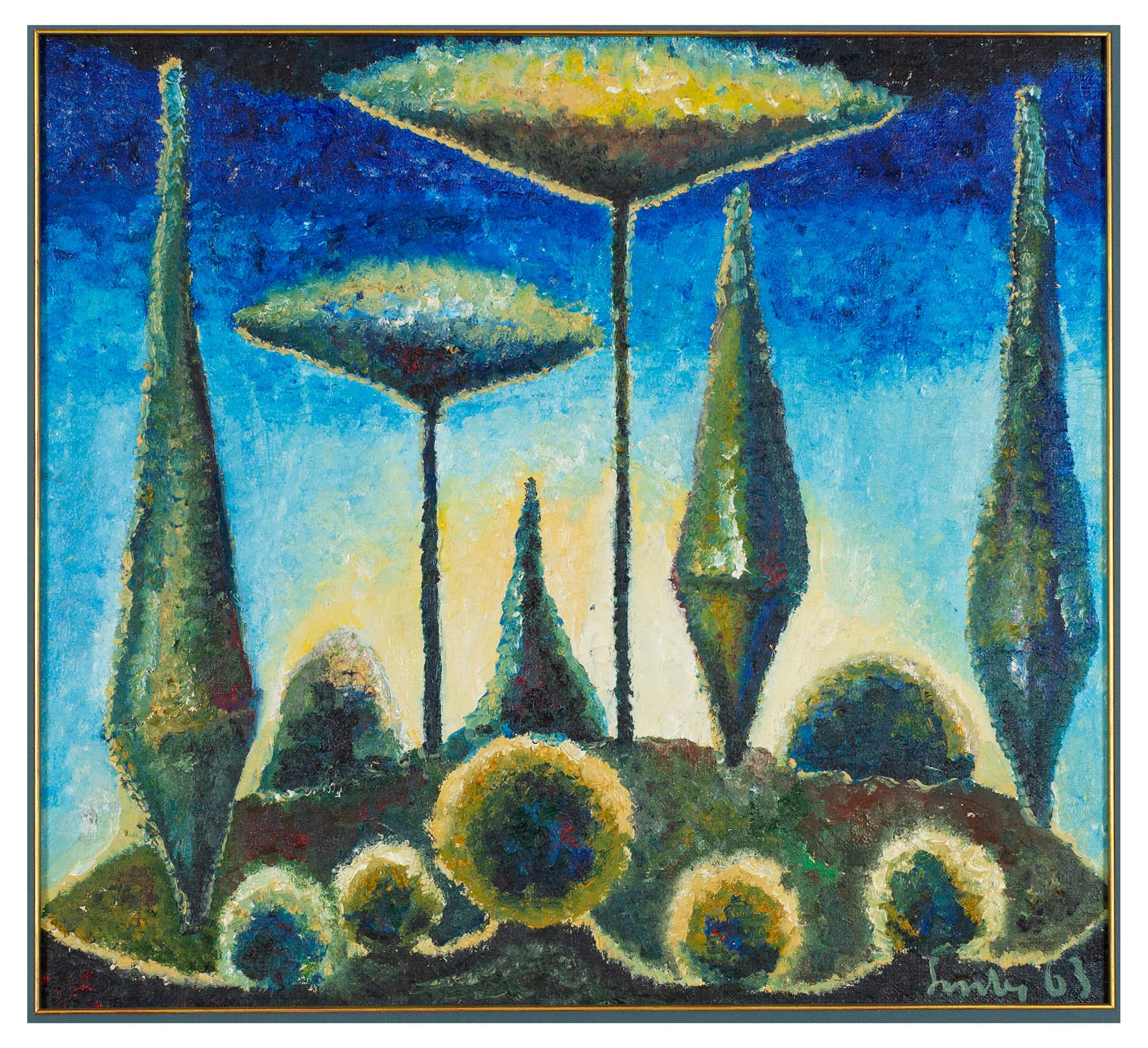
Ülo Sooster was born in 1924 and was predominantly inspired by the 1930s. The period of the 1930s is epito-
mised by the clashing of many political ideologies, including Marxist Socialism, Capitalist Democracy, and the
Totalitarianism of both Communism and Fascism. In the Soviet Union, Stalin’s government required urgent
funds to implement the rapid industrialisation demanded by the first Five Year Plan. It initiated a secret propos-
al to sell off treasures from the State Hermitage Museum in Leningrad (St. Petersburg), including a preliminary
list of two hundred and fifty irreplaceable paintings by the Old Masters, many which found their way to the
collection of Andrew Mellon via the New York based art dealing company, Knoedler. Surrealism continued to
dominate in Europe, and had influence internationally. Artists such as Frida Kahlo and Diego Riviera in Mex-
ico, worked to incorporate the ideas posed by Surrealism into their radical political ideologies, developing a
new kind of magic realism. Artistic output in the United States was heavily impacted at the time by the Great
Depression, and a number of artists took to focusing on ideas of modesty and the ordinary man. For the first
time in US history, artists began to delve into political subjects and endeavoured to use their art to impact so-
ciety. Themes such as poverty, lack of affordable housing, anti-lynching, anti-fascism, and workers' strikes were
predominant in many artists’ work. The decade took a ominous turn with the dawn of National Socialism in
Germany, followed by Adolf Hitler’s rise to power in 1933. By the end of the 1930s, the Second World War had
begun; which preoccupied both artists and the global population.
©Artland
112